Shipping containers have evolved far beyond dockyards and intermodal freight. Across Australia, 20-foot and 40-foot containers have become the default foundation for worksite offices, mine-site tool rooms, mobile laboratories, and backyard fabrication workshops.
They are cheap, modular, and practically indestructible. However, uninsulated or modified steel structures suffer from severe thermal physics problems: extreme solar thermal gain in summer and destructive moisture condensation ("container sweat") in winter.
Without active airflow, an uninsulated steel box acts like an oven by day and a condenser unit by night. Here is how heat and moisture behave inside shipping containers, how to calculate the precise airflow required to keep them dry and workable, and how SolarArk's dedicated container ventilation units solve the problem at zero running cost.
The Physics of the "Steel Oven": Thermal Buildup Explained
Corrugated steel is an exceptional conductor of thermal energy. On a standard 32°C Australian summer day, unshaded Corten steel panels easily absorb solar radiation until exterior surface temperatures surpass 65°C to 70°C.
Because steel containers have virtually no thermal mass or natural cavities to buffer radiation:
- Direct radiant heating: the ceiling and walls radiate heat directly into the enclosed space, quickly raising internal ambient air to 50°C and above.
- Thermal trapping: standard containers feature minimal passive venting — typically only small 50 mm labyrinth breathers designed to balance internal air pressure during ocean transit, not exchange air volume.
- Equipment heat loads: when power tools, computer monitors, mini-fridges or battery charging stations run inside, the heat has nowhere to escape, putting equipment and workers at serious risk.
In colder months or overnight, the opposite issue occurs: warm, humid air created by respiration, wet work gear or ground moisture hits the rapidly cooling steel ceiling, dropping past the dew point. The result is "container rain" — water droplets dripping onto wiring, tools, electronics and documents, accelerating rust and mould.
How to Calculate Required Container Airflow
To regulate temperature and strip moisture before it condenses, air cannot remain stagnant. You need a verified rate of Air Changes per Hour (ACH).
Step 1 — Calculate internal volume. Standard shipping containers come in standard dimensions:
| Container | Dimensions (L × W × H) | Internal volume |
|---|---|---|
| 20ft General Purpose | 5.90 × 2.35 × 2.39 m | ≈ 33.2 m³ |
| 40ft General Purpose | 12.03 × 2.35 × 2.39 m | ≈ 67.6 m³ |
| 40ft High Cube | 12.03 × 2.35 × 2.69 m | ≈ 76.2 m³ |
Step 2 — Determine the required air changes per hour. Depending on what the container is used for, apply the appropriate ventilation factor:
| Container application | Recommended ACH | Primary objective |
|---|---|---|
| Dry storage & tool shed | 10–12 ACH | Condensation mitigation, prevent mustiness and corrosion |
| Site office / accommodation | 15–20 ACH | Heat extraction, thermal comfort, fresh air replenishment |
| Active workshop (grinding / welding / glue) | 25–30+ ACH | Heat removal, smoke / fume flushing, air quality |
Step 3 — Apply the formula. Required airflow rate (m³/hr) = internal volume (m³) × target ACH.
Example 1 — a 20ft on-site office at a target of 20 ACH: 33.2 m³ × 20 = 664 m³/hr.
Example 2 — a 40ft High Cube fabrication workshop at a target of 25 ACH: 76.2 m³ × 25 = 1,905 m³/hr.
Why Passive Wind Whirlybirds Fall Short on Containers
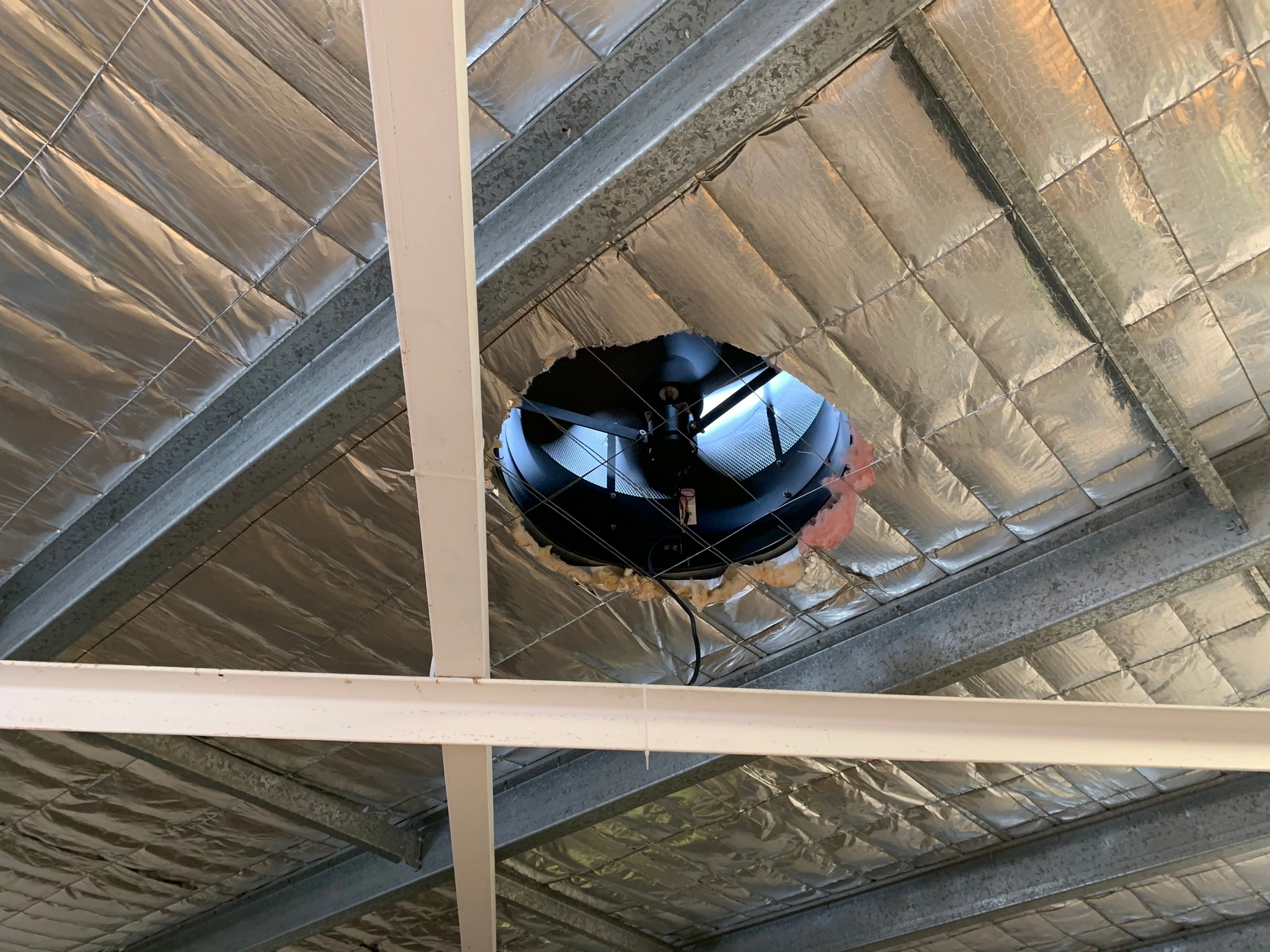
A traditional mechanical rotary whirlybird requires an ambient breeze to spin. On a sweltering, windless 38°C day — precisely when heat buildup is highest — a whirlybird moves as little as 50–100 m³/hr. For a 20ft container office, you would need 7 to 10 wind whirlybirds puncturing your roof just to achieve adequate airflow.
Every roof penetration in a flat container roof also introduces a potential water-ingress point. Cutting multiple holes for wind vents compromises structural integrity while providing almost zero extraction when the air is dead calm.
Active Solar Extraction: The SolarArk SAV-10BC & SAV-10SWF
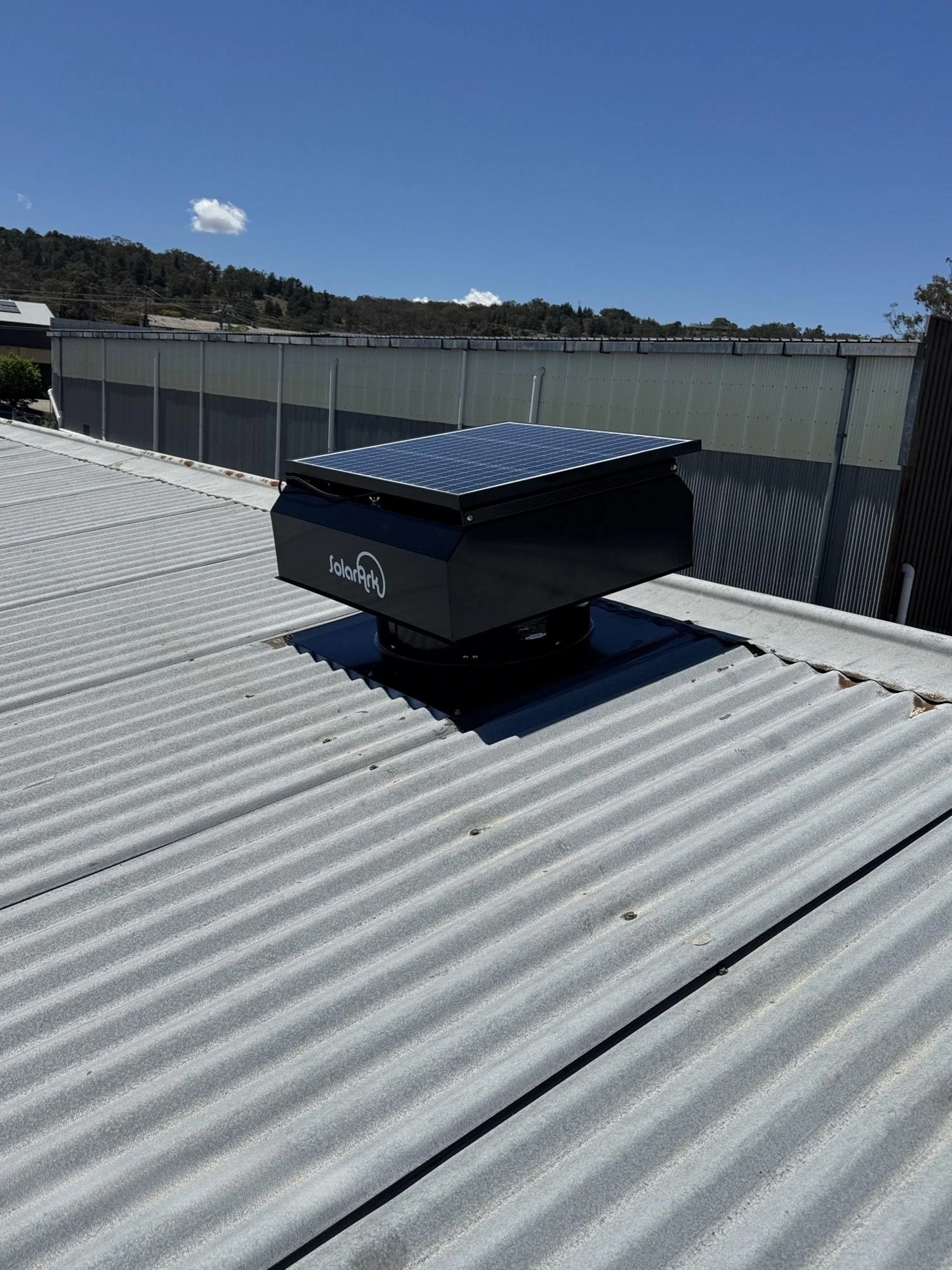
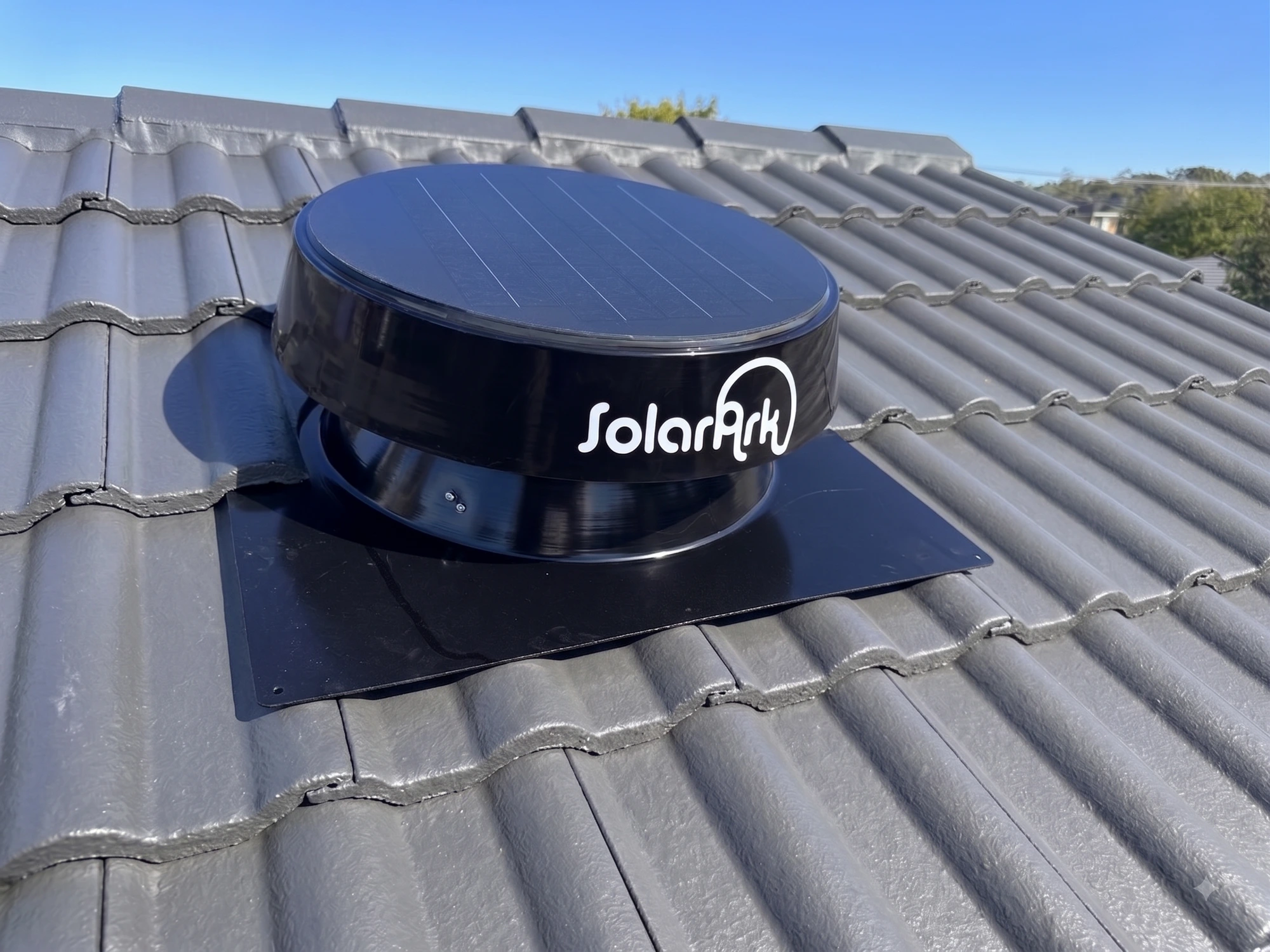
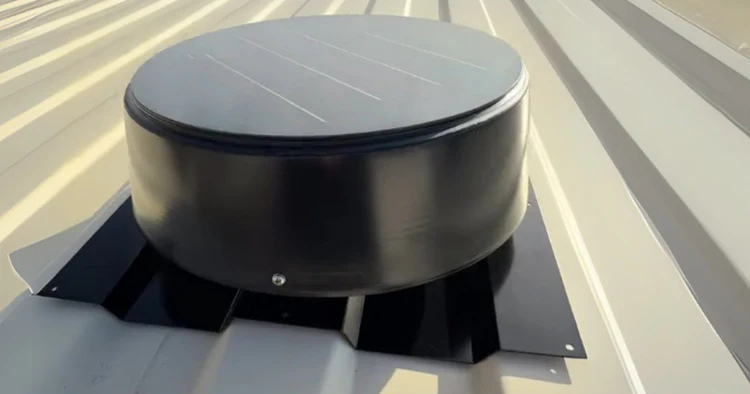
To solve the unique mounting and thermal dynamics of steel containers, SolarArk engineered dedicated container ventilation solutions: the SAV-10BC (box / container mount) and the SAV-10SWF (side wall fan).
Operating via high-efficiency monocrystalline solar panels driving brushless DC motors, the SAV-10 series moves 1,112 m³/hr of continuous air under full sun:
- In a 20ft container (33.2 m³), a single SAV-10 unit delivers over 33 complete air changes every hour — exceeding even heavy workshop standards.
- In a 40ft container (67.6–76.2 m³), a single unit delivers 14.5 to 16.4 ACH, completely cycling the internal air mass roughly every four minutes.
The thermal advantage — peak sun means peak flow. The operational curve of the SAV-10BC and SAV-10SWF directly mirrors the solar radiation profile. As the sun beats down on the corrugated roof and thermal buildup peaks, the solar fan operates at maximum RPM, ejecting rising superheated air before it can radiate downward into your workspace.
Tailored Form Factors: Roof vs Side Wall
- SAV-10BC: designed specifically for flat corrugated container roofs. It features a custom flashing profile that beds cleanly into container ribs, preventing ponding water and leaks while exhausting air vertically from the ceiling high point.
- SAV-10SWF: ideal for stacked containers, low-clearance depot racking, or site offices where roof penetrations are prohibited. It mounts directly into the vertical end wall or side wall corrugations, pulling air horizontally across the ceiling line.
Don't Forget Make-Up Air: Balancing the Inflow
An extraction fan can only remove air if fresh air can get inside to replace it. If your container is sealed airtight, an extraction fan will simply create negative pressure and stall. To achieve the full rated 1,112 m³/hr flow rate:
- Low-level intake vents: install weatherproof, louvered intake vents on the lower opposite side of the container, at floor level.
- Cross-flow dynamics: by placing the intake low on the shady side and the SAV-10BC/SWF high on the opposite side or roof, you create a sweeping diagonal cross-ventilation path that replaces stagnant floor air and forces hot ceiling air out.
- Vermin & weather mesh: ensure all intake openings are fitted with stainless steel mesh to prevent insects, rodents and driving rain from entering the workshop.
Dry, Cool, and Completely Off-Grid
Whether your container is wired to mains power on a construction site or sitting off-grid on a rural property, SolarArk container ventilators run on $0 electricity and require no external 240V hookup.
By continuously circulating fresh air during the hottest parts of the day and preventing nighttime moisture condensation, you protect expensive tooling from rust, keep electronics operational, and maintain a humane, productive work environment.
Need to size ventilation for your container configuration? Contact the SolarArk engineering team for tailored advice for your workshop or site office.