Sheds, workshops and garages can become extremely hot and stuffy, particularly through the warmer months. With large metal roofs absorbing heat throughout the day, temperatures inside can quickly climb well above the outdoor temperature.
Solar roof ventilation is a simple way to help remove that built-up heat and improve airflow throughout your shed.
How does shed ventilation work?
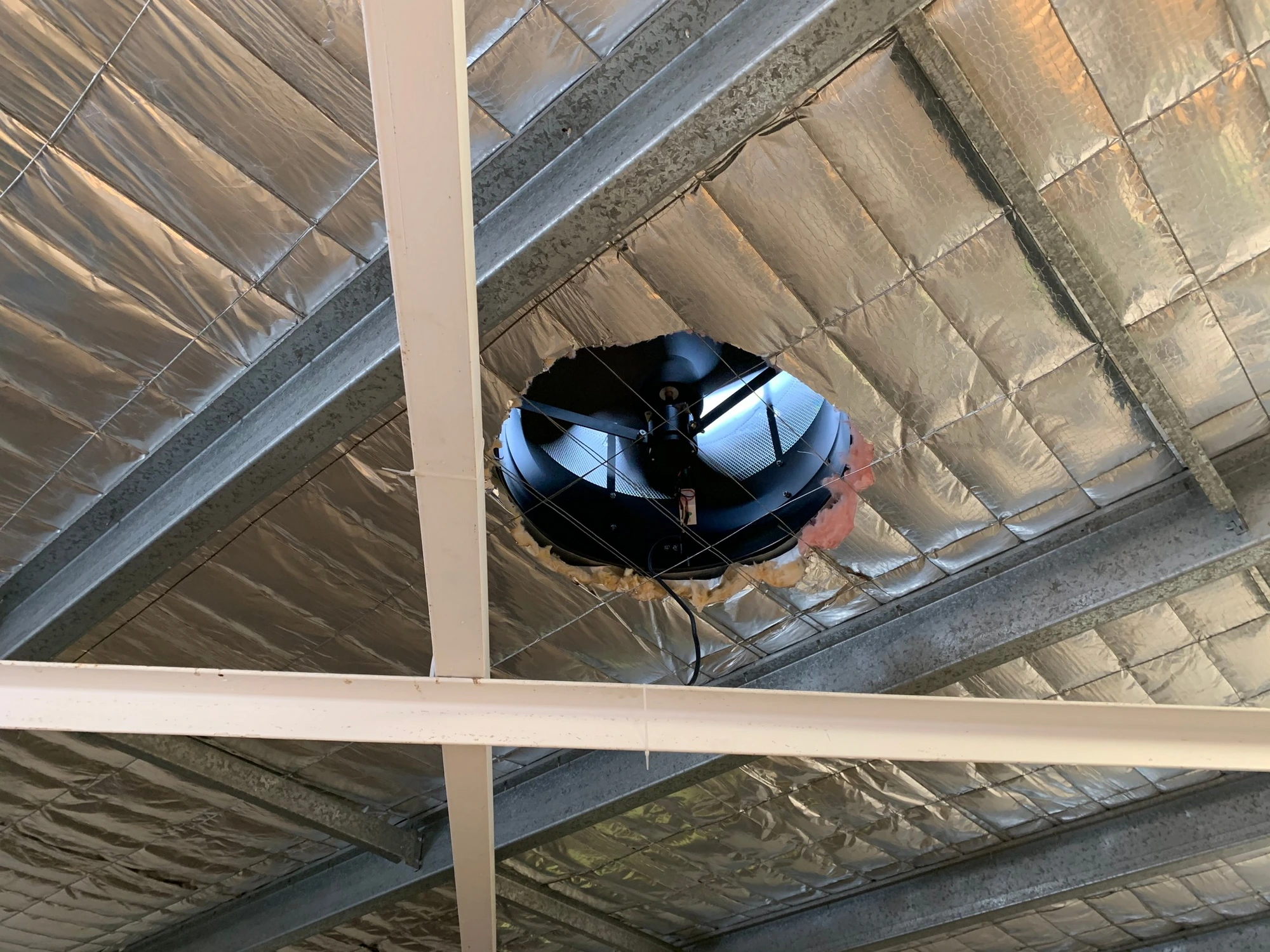
A solar roof ventilator works by drawing hot, stale air from inside the shed and exhausting it through the roof. As hot air is removed, fresh air is naturally drawn in through available openings such as eaves, doors, vents or wall gaps.
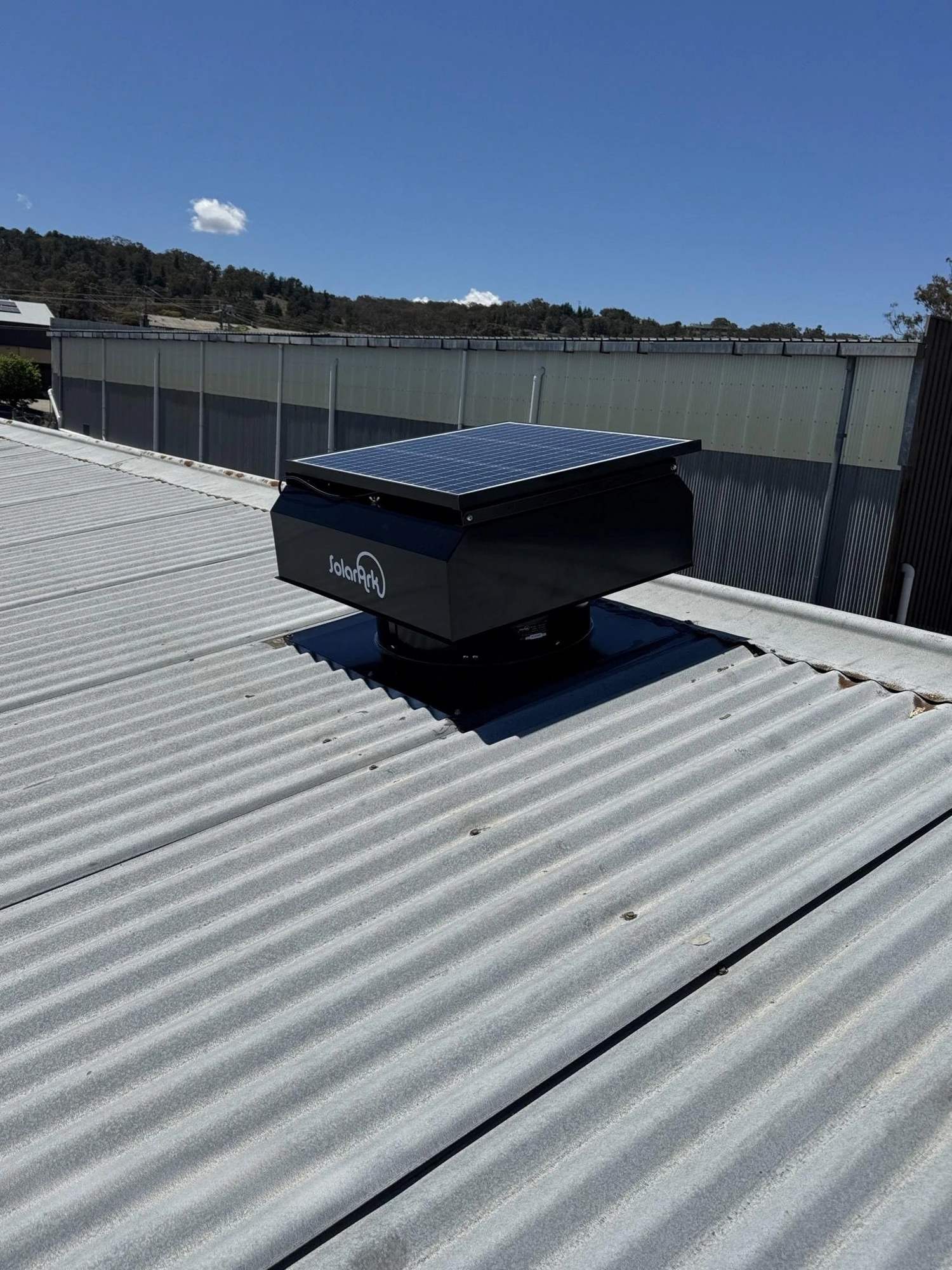
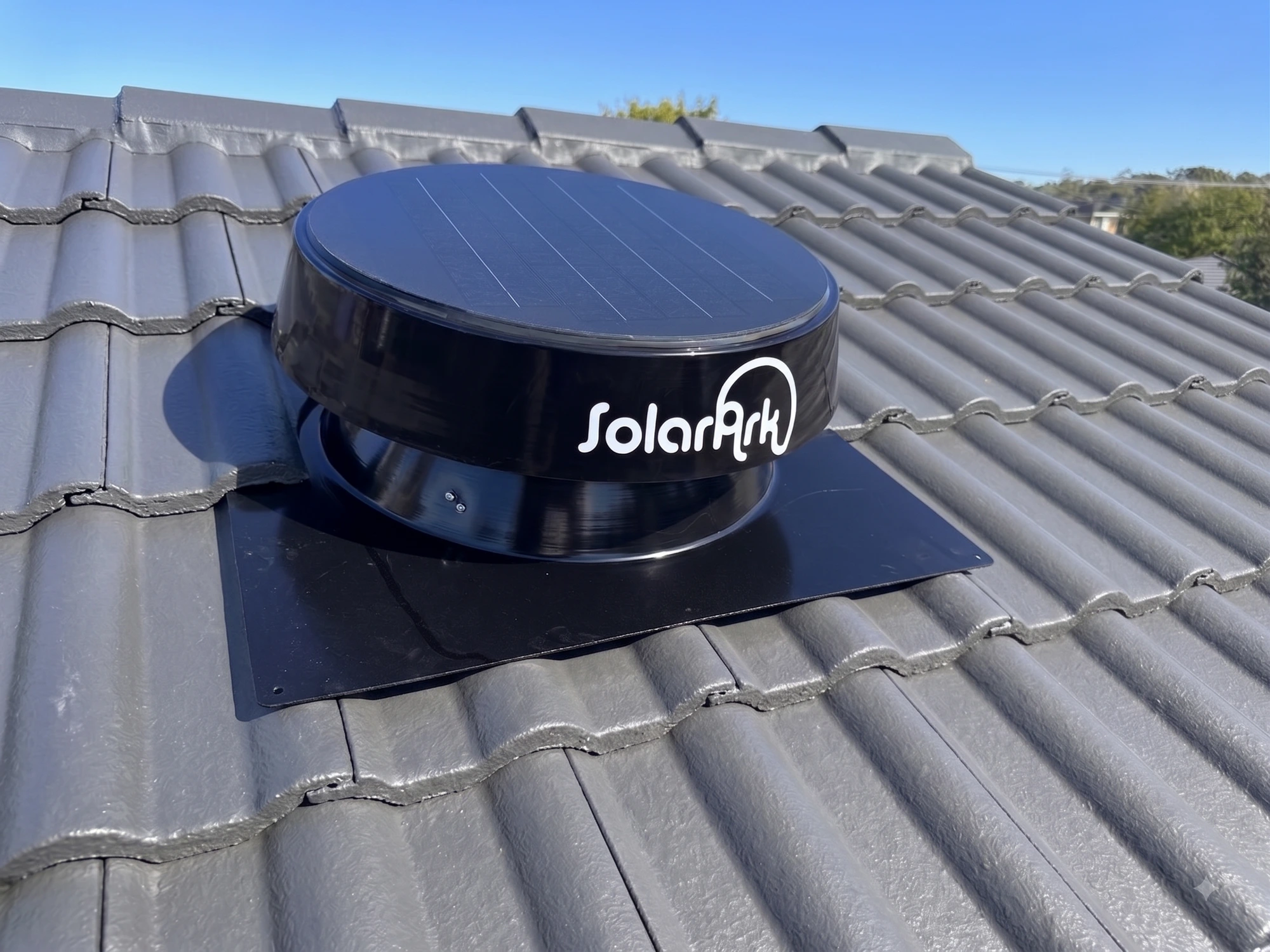
Unlike a passive whirlybird, a powered solar ventilator uses a solar panel to actively drive a high-flow fan. This means it can move significantly more air and provide more effective ventilation across larger shed spaces.
What are the benefits?
Installing solar ventilation in a shed can help:
- Reduce heat build-up inside the shed
- Improve airflow and reduce stagnant air
- Make workshops and garages more comfortable to work in
- Help reduce moisture and condensation
- Protect stored equipment and belongings from prolonged heat and humidity
- Reduce the amount of heat transferred into adjoining areas
- Provide ventilation with no ongoing electricity costs during normal solar operation
For larger sheds and workshops, multiple ventilators can be installed to achieve the required airflow and ventilation rate.
Why do people call them a “solar whirlybird”?
The term “solar whirlybird” has become a common way of describing solar-powered roof ventilators because they perform a similar job to the traditional whirlybird — they remove hot air from the roof space. The key difference is how they operate.
A traditional whirlybird relies on wind and natural convection to turn the turbine and move air. A solar roof ventilator uses a powered fan driven by a solar panel, allowing it to actively extract much larger volumes of air regardless of whether there is much wind.
So while “solar whirlybird” is a popular name, products such as the SolarArk SAV range are more accurately described as solar-powered roof ventilators.
The right ventilation for your shed
The amount of ventilation required depends on the size and height of the shed, how it is used and the amount of heat being generated inside. For a workshop, machinery shed, garage or large storage area, selecting the correct airflow capacity is important to ensure the system can effectively exchange the air within the space.
If your shed becomes unbearably hot during summer, solar roof ventilation can be a simple and effective way to get the air moving and help create a more comfortable environment.